



When France, Britain and other Western powers last year recognised a Palestinian state, entrepreneur Adam Bader felt a sense of hope.
"I was happy when I heard about it," said Bader, 27, who lives in the occupied West Bank's city of Tulkarem, which has seen repeated Israeli raids in recent years.
"Now a year on, we're not seeing any improvement. On the contrary," he said. "The situation is getting worse by the day and no one can do anything."
A year after the recognition, Palestinian statehood in real, tangible terms looks more distant than ever.
Israeli settler violence has soared, Palestinians are being pushed into ever-smaller areas and the Palestinian Authority has only been weakened.
French President Emmanuel Macron, vowing to find a new path forward amid global outrage over Israel's offensive in Gaza, on September 22, 2025 led a special UN summit to recognise a Palestinian state.
Ten countries, also including Britain, Canada and Australia, recognised Palestinian statehood, bringing the number of UN member-states doing so to around 157, more than four-fifths of the UN membership.
But Israel, which enjoys support from the United States, adamantly rejects Palestinian statehood, and has stepped up efforts to isolate the Palestinian Authority of president Mahmoud Abbas.
While Prime Minister Benjamin Netanyahu stopped short last year of formally annexing the West Bank, observers say unofficial annexation is creeping as his right-wing government approves an unprecedented number of settlements.
"Recognition makes the two-state solution a reality politically and diplomatically, but unfortunately on the ground it still depends on the illegal behaviour of Israel, which is not implementing international resolutions," Omar Awadallah, deputy foreign affairs minister of the Palestinian Authority, told AFP.
Ines Abdel Razek, a Palestinian political analyst, said that recognition of a state of Palestine amounted to little without measures to support its existence and counter Israeli actions.
"The two-state solution's become a diplomatic refrain to avoid looking at reality in the face," she said.
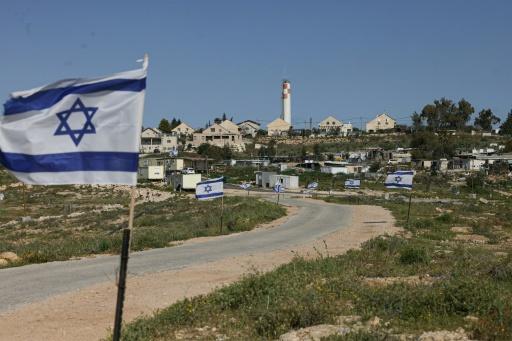
Across the West Bank's limestone hills, thousands of Israeli flags line roads used by Israeli settlers, with the occasional graffiti "No future in Palestine" stencilled on walls, as a call for Palestinians to leave.
Netanyahu argues that a Palestinian state would be a "reward for terrorism" after Hamas on October 7, 2023 carried out the deadliest attack ever on Israel, which responded with a massive military operation in Gaza.
"As long as I am prime minister, an Iranian-controlled Palestinian state will not be established -- neither in Gaza nor in Judea and Samaria. Period," Netanyahu said last month, using the biblical name for the West Bank.
Iran, which the United States and Israel attacked in February, backs Hamas in Gaza. The Palestinian Authority, centred in the West Bank, is led by Fatah, Hamas's archrival.
Ahead of the anniversary, Israel ordered the closure of the UK consulate serving Palestinians from Jerusalem, angered after Britain led France and Canada in sanctions over rising attacks by settlers.
Foreign Minister Gideon Saar, explaining the move, said Britain's Labour government was attempting to "force upon Israel" a Palestinian state but the attempt was "doomed to fail".
The Palestinian Authority, established in the 1990s, has been starved of cash in part by Israel's decision not to give it customs revenue it collects on its behalf, and struggles to pay its civil servants.
Israel has objected to the Palestinian Authority's historic payments to families of imprisoned or slain Palestinians, including those who carried out attacks against Israelis.
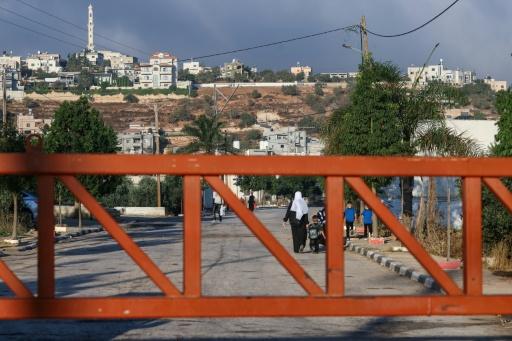
In early 2025, Israel built nearly 1,000 gates in the West Bank, at the entrances of nearly all villages and towns, which it closes on occasion to control Palestinian movement.
Palestinians have also decried a policy of "maximum land, minimum Arabs" whereby settlers push out isolated herder communities from rural areas in order to establish settler outposts.
The UN says extremist settlers have been responsible for an average of six attacks per day on Palestinians and Palestinian property in the West Bank in 2026.
Palestinians complain that Israeli perpetrators of violence are almost never brought to justice, and are protected by the army.
Defence Minister Israel Katz has called for police to take over civilian matters from the military in the West Bank, a move observers see as a further step towards annexation.
Sameh, a software engineer in Nablus, still sees last year's move as a positive sign, but concedes the difficulties.
"There is still a big distance between international recognition and seeing that recognition translated into reality on the ground," he said.
Latest stories

La Une روسيا تصادر أصول نستله وثلاث شركات فرنسية
صادرت السلطات الروسية الأعمال والأصول المتبقية لشركة الأغذية السويسرية العملاقة نستله وثلاث مجموعات فرنسية، في خطوة جديدة تستهدف الشركات الغربية ردا على العقوبات المفروضة على...
La Une بدء الانتخابات التشريعية في روسيا على وقع تصعيد أوكراني
فُتحت مراكز الاقتراع باكرا الجمعة في أقصى الشرق الروسي، في بداية عملية انتخابية تستمر ثلاثة أيام وتبدو محسومة النتائج لصالح حزب روسيا الموحّدة بزعامة الرئيس فلاديمير بوتين، فيما تلقي الحرب الأوكرانية المستمرة...
اقتصاد وفاة 37 شخصا يشتبه بممارستهم التعدين غير القانوني أثناء احتجازهم في نيجيريا
علقت الحكومة النيجيرية الجمعة عمل مسؤول في جهاز الدفاع المدني وأمرت بإجراء "تحقيق شامل"، بعد وفاة 37 شخصا يُشتبه في أنهم كانوا يعملون في التعدين غير القانوني أثناء...