


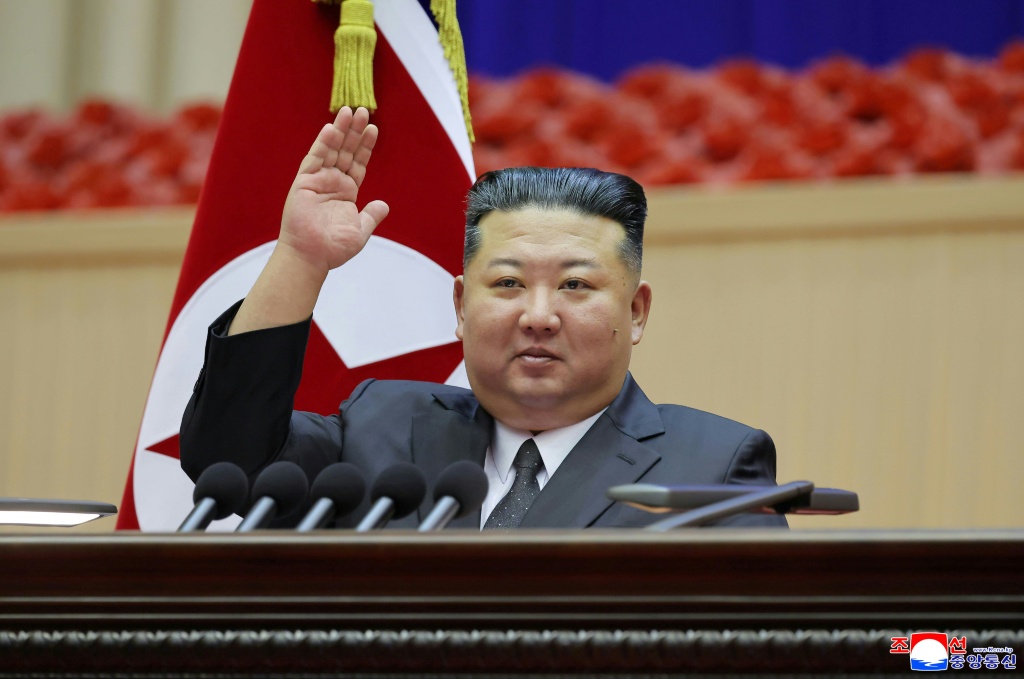
North Korean leader Kim Jong Un returned home on Saturday after making a day-long trip to the Chinese border city of Dandong, Beijing's state media reported, though the purpose of the unannounced visit was not immediately clear and there was no mention of talks with his counterpart Xi Jinping.
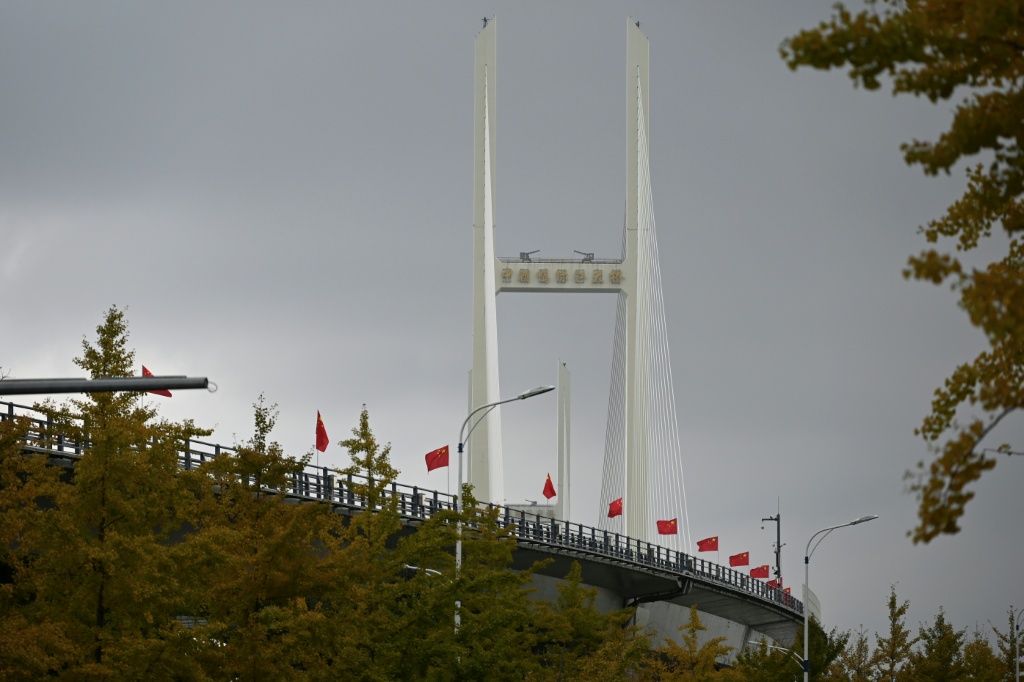
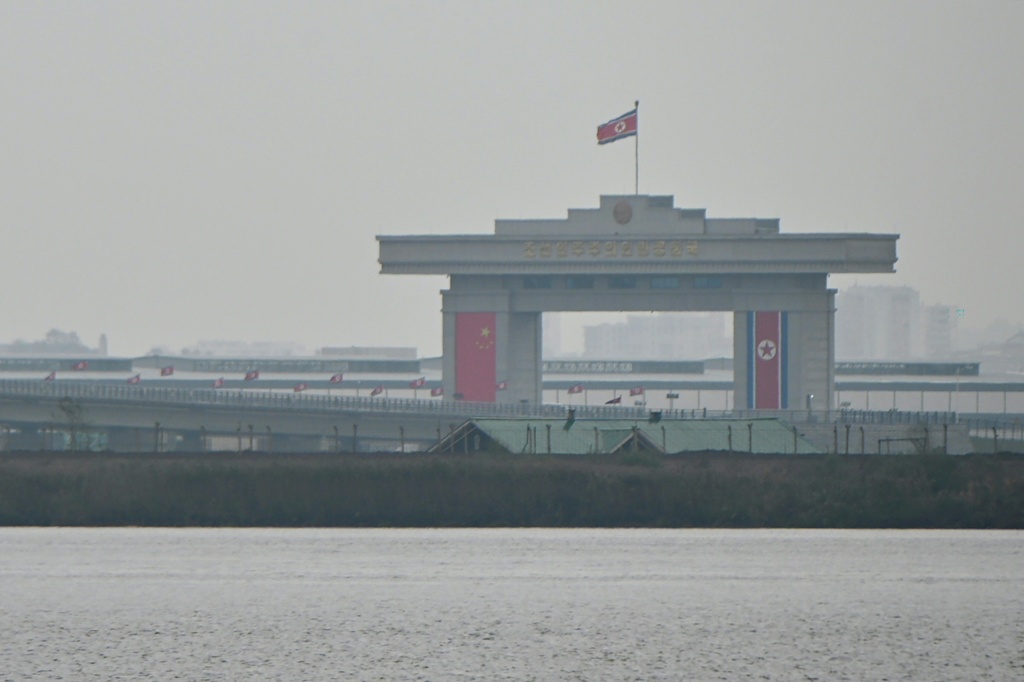
Kim is thought to have crossed into China via a major border bridge that officially opened last week, 12 years after its completion, deepening economic ties between China and diplomatically isolated North Korea.
Neither North Korea nor China disclosed Kim's visit in advance. South Korean lawmaker Youn Kun-young said Kim was "understood" to have met Chinese Premier Li Qiang on Saturday.
A readout from China's Xinhua news agency did not mention talks between Kim and Xi or Li. Instead, it said Wang Huning, Beijing's top political advisor, accompanied Kim in Dandong and "saw him off" at the bridge at the end of the trip.
The aims and outcomes of Kim's visit were murky, but China is North Korea's largest trading partner and a vital source of diplomatic, economic and political support for Pyongyang.
Xinhua quoted Wang as saying the visit was significant for "consolidating public goodwill towards the friendship... (and) deepening political mutual trust and jointly pursuing cooperation and development".
He also said China and North Korea should expand personnel exchanges, economic cooperation and strategic coordination, "to foster a peaceful and stable external environment for safeguarding their respective sovereignty, security and development interests", according to Xinhua.
Wang conveyed Xi's "cordial greetings and best wishes" to the North Korean leader.
The trip fell near the date both countries use to mark the entry of Chinese troops into the Korean War. Kim attended a memorial ceremony to fallen soldiers and visited an automobile factory, Xinhua said.
China's top diplomat, Wang Yi, also took part in the events, it added.
Youn, the South Korean lawmaker, said he had been briefed on Friday that a visit was likely.
The trip could send a "positive signal" about a possible US-North Korea summit, he said in a statement sent to AFP.
World leaders are preparing for November's APEC summit in China's Shenzhen, where it has been speculated that Kim may meet US President Donald Trump.
The New Yalu River Bridge was completed in 2014 but its opening was delayed due to a lack of connecting roads and customs facilities on the North Korean side, according to South Korean news reports.
Its opening came a little more than a month after North Korea and Russia opened their first road bridge.
Kim may have sought to "press China to move more quickly" on commitments agreed during Xi's visit to North Korea this year, Yang Moo-jin, former president of the South's University of North Korean Studies, told AFP.
"He may also have sought Beijing's active support and cooperation ahead of a possible summit with Trump in Shenzhen."
Hours before South Korea's Yonhap news agency first reported Saturday's visit, North Korea's state media said Kim had urged his military at a major meeting in Pyongyang to train to become the strongest in the world.
Kim's call for what he dubbed a "Korean-style military revolution" came soon after Seoul's military proposed talks to clarify the shared border with the North, following an explosion inside the heavily fortified Demilitarised Zone.
Seoul's military proposed the talks on Friday after it blamed the blast, which injured South Korean soldiers and severely strained North-South relations, on North Korean landmines. Pyongyang strongly rejects the claim.
North Korea has not responded to the proposal and previously rejected the South's demand for an apology over the explosion.
The countries remain technically at war as their 1950-53 conflict ended in an armistice, not a peace treaty.
Despite long-running UN sanctions, North Korea has enshrined its status as a nuclear-armed state in law, with its regime repeatedly declaring its atomic arsenal permanent and irreversible.
South Korea's dovish President Lee Jae Myung -- who has repeatedly offered Pyongyang talks without preconditions -- suggested in September that Washington seek a freeze, rather than the immediate elimination, of its nuclear programme in return for sanctions relief.
Critics say such an approach risks tacitly accepting North Korea as a nuclear-armed state while allowing Pyongyang to win sanctions relief without giving up its arsenal.
Analysts say China has also appeared to move towards implicit acceptance.
Kim hosted Xi in Pyongyang in June, soon after Xi held back-to-back summits in Beijing with Trump and Russia's Vladimir Putin.
Neither Pyongyang nor Beijing mentioned North Korean denuclearisation in their official statements after the June meeting -- an omission experts saw as a sign of China's tacit consent.