


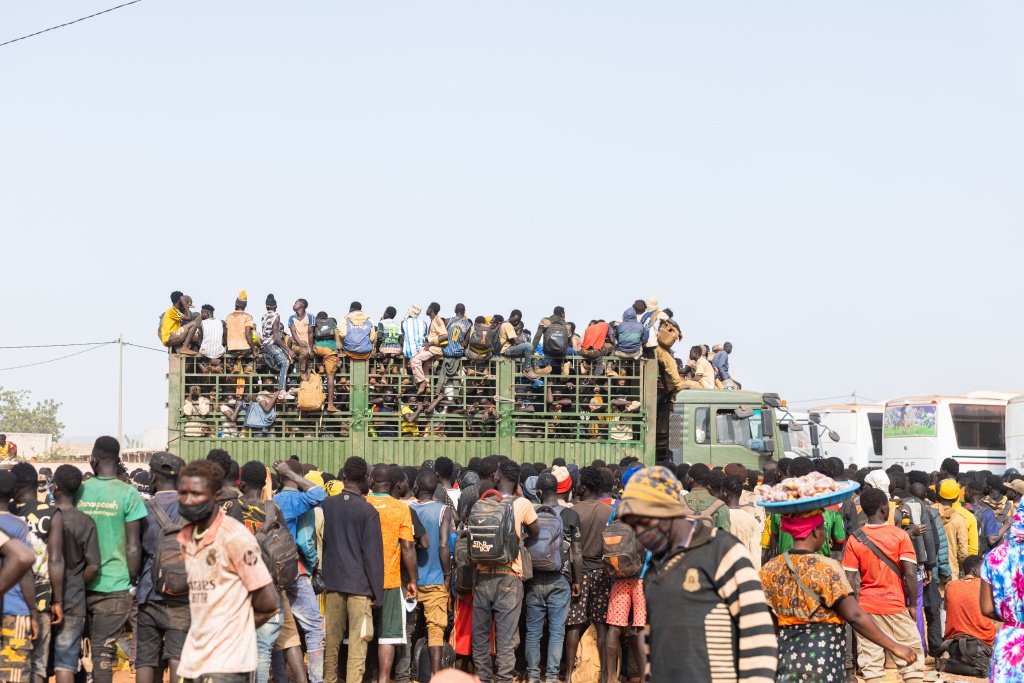
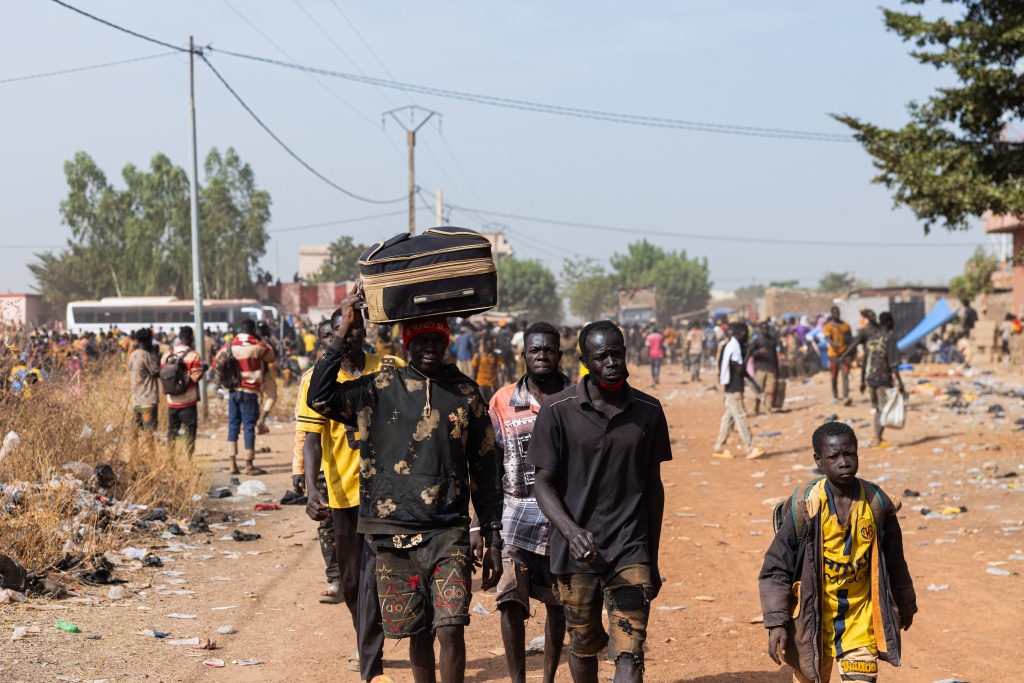
Moussa Konate searched desperately for his wife among the crowds flooding into Mali after Guinea's crackdown on illegal mining sent thousands scrambling across the border.
The 41-year-old Ivorian has not seen her since they fled several days earlier. Seven months pregnant, she vanished in the panic.
"There was pushing, screaming, smoke everywhere," he said, his face etched with worry.
"When security forces ordered us to leave, everything happened very fast.
"I've spent days asking new arrivals if they've seen her but nobody has," he told AFP from Ouezzindougou, one of two official reception sites.
Since Guinea deployed security forces to stamp out illegal artisanal gold mining in its northeast early this month, a tide of displaced miners and their families has poured into Mali.
Rich in mineral resources, Guinea says it is trying to curb the environmental harm caused by informal gold mining, such as land degradation and water pollution.
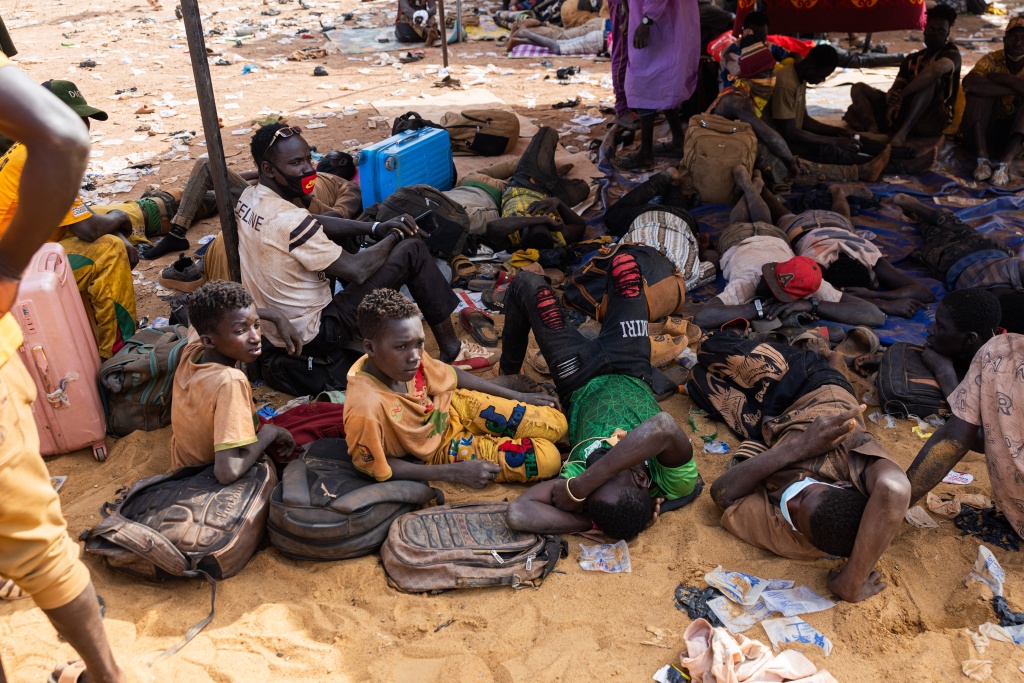
But the operation has left thousands stranded across the border in Mali, many exhausted, penniless and separated from their families.
Around 100,000 people have arrived in the capital Bamako alone since the start of the operation, while another 60,000 have gathered in the border town of Kouremale, according to Malian authorities.
Ten deaths have been recorded so far.
Many of those expelled are Burkinabe, though Ivorians, Senegalese, Togolese and Beninese are also among the arrivals, Mali's health ministry said.
At Ouezzindougou, thousands of exhausted miners and their families laid down on the ground after trekking 125 kilometres (78 miles) from Kouremale.
Along nearby walls of houses and beneath makeshift shelters, tarpaulins and tents offered little protection from the sun.
Alassane Kabore, a 21-year-old from Burkina Faso, struggled to walk, his knee hastily bandaged after the journey.
"We went through things I wouldn't wish on anyone," he said bitterly.
Families were torn apart in the chaos, while hospital sources said that at least six women have given birth in Mali since the arrivals began.
"Some people were beaten. Others lost relatives in the panic as everyone fled through the bush," Kabore said.
"Today we feel like we've been thrown away like rubbish, with no respect for our dignity."
Nearby, Seydou Traore, a Burkinabe miner in his 30s, leaned against a wall clutching a worn bundle of belongings in his calloused hands.
"We worked hard there, honestly," he said quietly. "Then one day everything changed. We were told to leave immediately, without even enough time to collect our tools or savings.
"I left everything behind -- my shovels, a few gold nuggets, my clothes. I'm going home with nothing, ruined."
The Malian health ministry estimates that it will need nearly 228 million CFA francs ($388,000) to respond to the crisis.
For now, authorities, aid groups and locals help feed and shelter those arriving from Guinea.
But the influx heaps further pressure on a country where more than five million people already rely on humanitarian aid, according to the UN.
Officials are also worried that vulnerable migrants could become targets for recruitment by jihadist groups in the Sahel.
"These people are vulnerable. We are looking at ways to prevent them from being approached by terrorist networks," a Malian security ministry official told AFP.
Mali has contacted the countries whose citizens were among those expelled, he said.
"Some have promised to come and collect their nationals, including Ivory Coast. Burkina Faso, which has the largest number of citizens affected, has already started repatriating them," he added.
On Wednesday, Burkina Faso announced that 37,136 people had arrived as part of repatriation operations from Mali, including 7,988 children and 1,049 nationals of other countries.
In Guinea, more than 1,200 suspected illegal miners have been arrested in the northeast and the first mass trials opened this week in Conakry.