


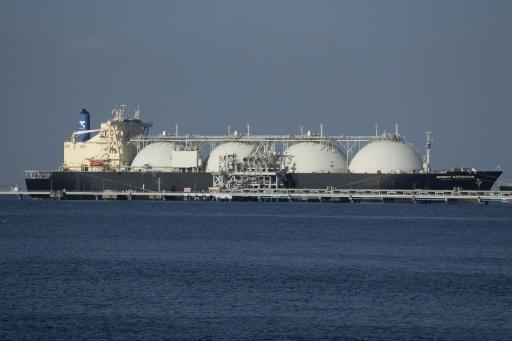
European gas prices have more than doubled owing to the US-Iran war, just as Europe needs to replenish its reserves ahead of winter.
AFP examines the severity of the current spike, comparing it with energy price shocks in the wake of Russia's invasion of Ukraine.
Since the 2022 Russia invasion, the European Union has required member states to fill their gas reserves each year to at least 80 percent capacity by November 1 in order to mitigate the risk of shortages during the coldest months.
With less than two months to go before the deadline, current fill levels stand at an average of 67 percent, well below the 79-percent mark at the same time last year.
Much of the decline is owing to Germany, where stocks in Europe's biggest economy stand at just 53 percent of capacity compared to 71 percent this time last year.
This points to a surge in demand ahead of the current winter. Europe must also compete with Asia to secure liquefied natural gas (LNG) shipments.
"No comparably low storage level has been recorded at this time of year," said industry lobby group INES.
It cautioned that the "window for sufficient refill is closing".
The competition for gas stocks between European and Asian countries risks further driving up prices -- which have more than doubled to approach 75 euros per megawatt-hour owing to the conflict in the Middle East.
The war has effectively blocked the Strait of Hormuz, which before the conflict transported about one fifth of the world's LNG and oil.
The outlook for gas prices centre primarily on Qatar -- one of the world's largest LNG suppliers and whose exports rely on maritime shipping.
"If disruptions in the Strait of Hormuz persist through the winter, a price range of 100 to 150 euros per megawatt-hour is plausible," Julien Mathonniere at Energy Intelligence told AFP.
Another variable could be the climate, noted Jonathan Schroer, a strategist at UniCredit.
He said the El Nino weather phenomenon over the summer had made temperatures hotter in much of the world.
"This is significant because hotter weather creates more demand for power for cooling systems, driving higher electricity consumption, especially in Asia," which is home to major LNG importers China, India and Japan.
However, analysts consider it unlikely that there is a return to the 2022 price peaks -- when the European benchmark contract TTF briefly exceeded 300 euros per megawatt-hour.
In 2022, the shock stemmed from an EU policy decision to reduce reliance on Russian gas, which at the time provided 45 percent of the bloc's requirements, according to Schroer.
The sudden loss of these volumes forced European nations to urgently reorganise their supply chains and build new LNG terminals.
Today, the issue is less about a single supplier, rather more about tighter global supplies.
Europe is now more exposed to international competition for LNG cargoes than to a direct supply cutoff.
European countries are consuming less gas than in 2022 as they increasingly switch to renewables to generate electricity.
According to the European Commission, renewable energy accounted for nearly half of the EU's electricity generation in 2025.
Analysts believe this shift reduces the risk of a gas price spike translating into electricity bill hikes as severe as those seen in 2022, although costs are still expected to rise.
Latest stories
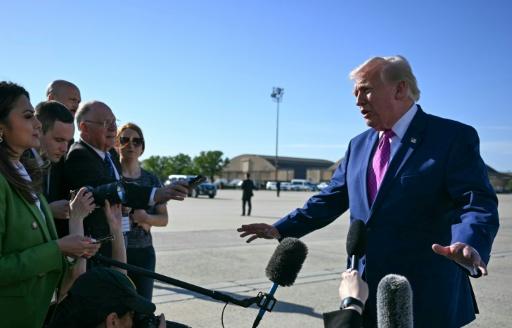
Monde Trump veut empêcher CNN et d'autres médias de venir à la Maison Blanche
Donald Trump, intensifiant de manière spectaculaire sa guerre contre les médias, a annoncé vendredi interdire l'accès à la Maison Blanche aux chaînes de télévision CNN et MSNOW (anciennement MSNBC) ainsi qu'au...
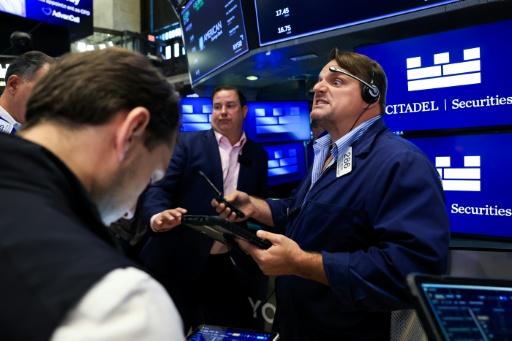
Economie/Finances Wall Street termine en ordre dispersé, entre Fed et taux élevés
La Bourse de New York a clôturé sans orientation claire vendredi, écartelée entre le crédit renouvelé des marchés à la stratégie de la Réservé fédérale (Fed) pour freiner l'inflation et...
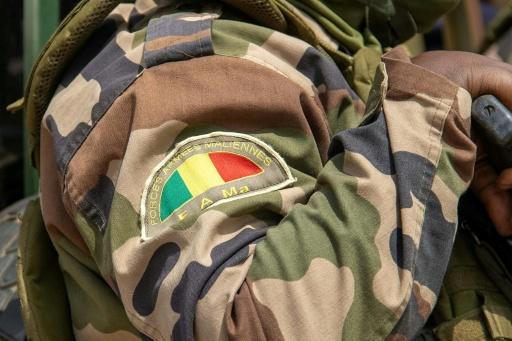
La Une Nouveau bilan d'une attaque jihadiste au Mali: au moins 100 militaires tués (sources concordantes)
Au moins 100 militaires maliens et cinq paramilitaires russes d'Africa Corps ont été tués le 10 septembre lors d'une attaque jihadiste d'ampleur contre le camp militaire de Dioura (centre), selon des sources militaire, sécuritaire et...