


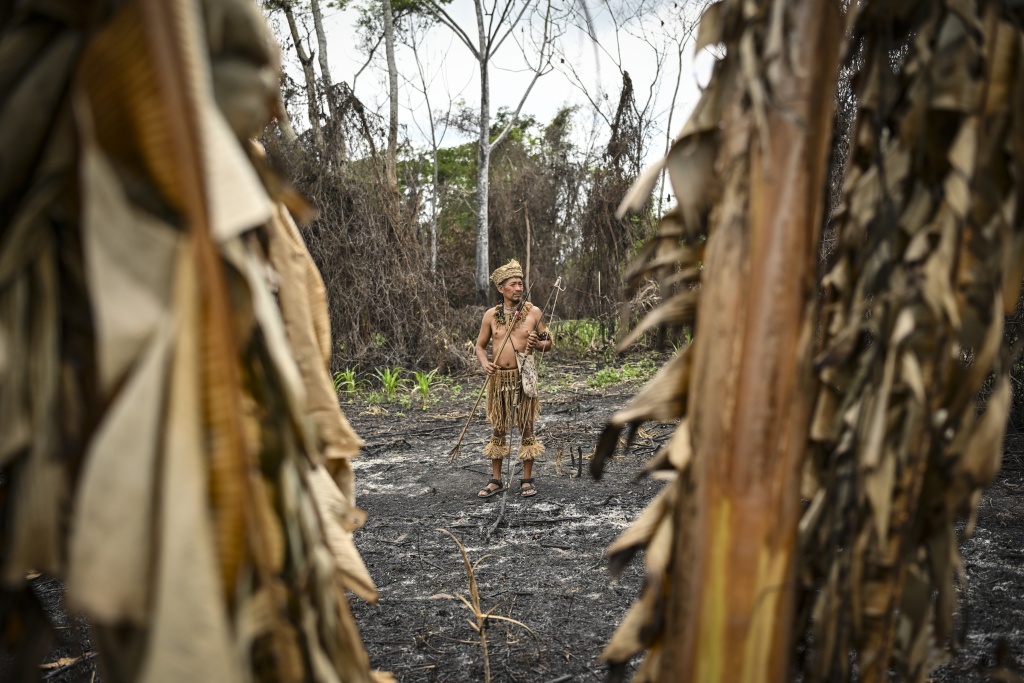
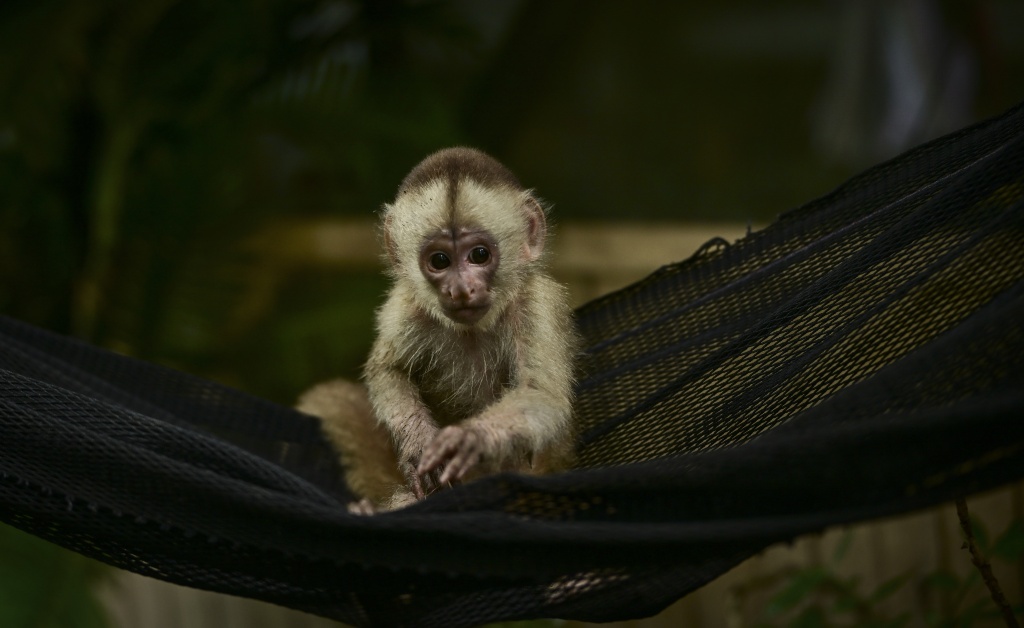
Fernando Carteiro remembers the good old days when his home in the Peruvian Amazon was lush with wildlife, as lizards darted around on the ground, monkeys frolicked and sloths lazed in thick groves of trees.
Now, thanks to deforestation, he laments that his children will never see such natural wonders.
Carteiro and other Indigenous people are hoping that a visit Sunday from Pope Leo XIV will shine a light on the destruction of their once vibrant habitat.
The 71-year-old US-born pope arrived in Peru Wednesday as part of a grueling 12-day tour of Latin America even as he recovers from surgery for lung cancer just a month ago.
The pontiff has visited Lima, rural communities like Santa Cruz de Succhabamba, a remote spot in the Andes at an altitude of 2,000 meters (6,600 feet), and even the coastal city of Chiclayo where he used to serve as bishop.
And on Sunday he will venture into Peru's huge slice of the Amazon to listen to Indigenous people and stories of deforestation wrecking their lives.
Leo will also bless and water a tree called a shihuahuaco -- an Amazon species that can live for more than 1,000 years but is prized by loggers.
Carteiro, an Indigenous leader, told AFP that deforestation "is the greatest source of suffering that we have in the Amazon, along with mining."
He wears clothes made from the shiny tropical plant fiber called jute, and a crucifix around his neck.
Carteiro and some 200 families live on a river island in an area called Yarinacocha, and get by mainly by receiving tourists.
The island still has plenty of trees, although they are sometimes threatened by forest fires. But one species that used to be abundant is now scarce, because of deforestation: a small bushy riverside tree called the camu camu.
So Carteiro planted camu camu seeds around his house, which is made of logs and perched on tall pillars to stay safe when the Ucayali River runs high.
He wants his kids to have what he did -- a wild, healthy rainforest just outside their door, free from fires and loggers.
"I want my children to be able to breathe fresh air. This is my main desire from the pope. I know he will raise awareness among many people," said Carteiro, who is 53.
From 2001 to 2024 Peru lost 3.2 million hectares of Amazon forest, mainly in the jungle regions of Ucayali, Madre de Dios and Loreto, the Environment Ministry says.
"The message that he can give is not just to Peru. It will be for the whole world," Carteiro said of the pope.
"And this is what we will most feel. This is what we value, that he will speak on our behalf."