


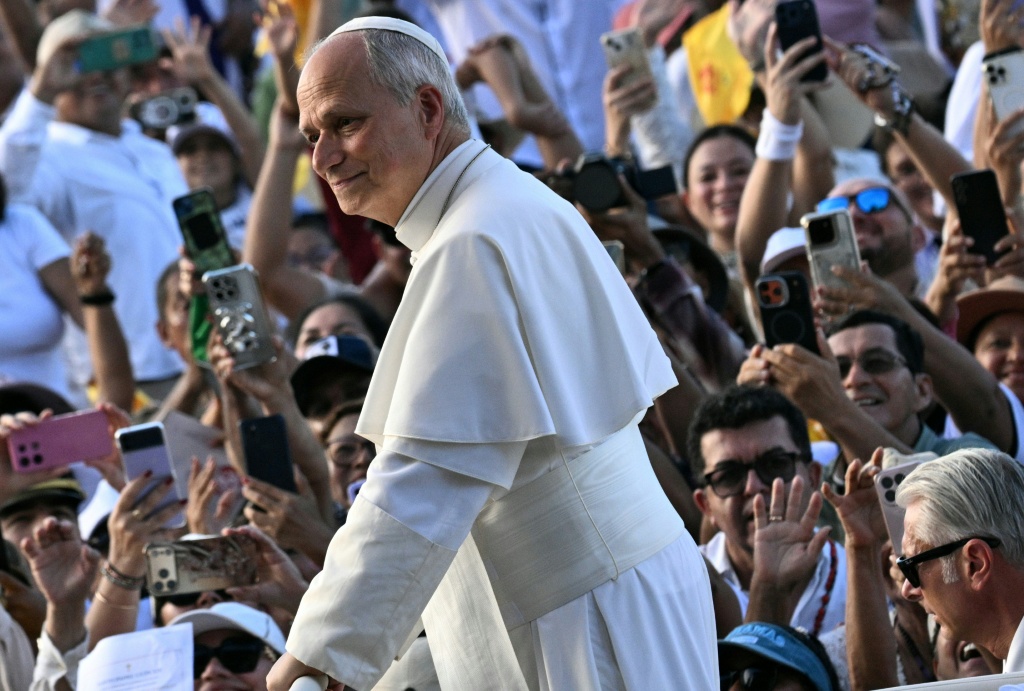
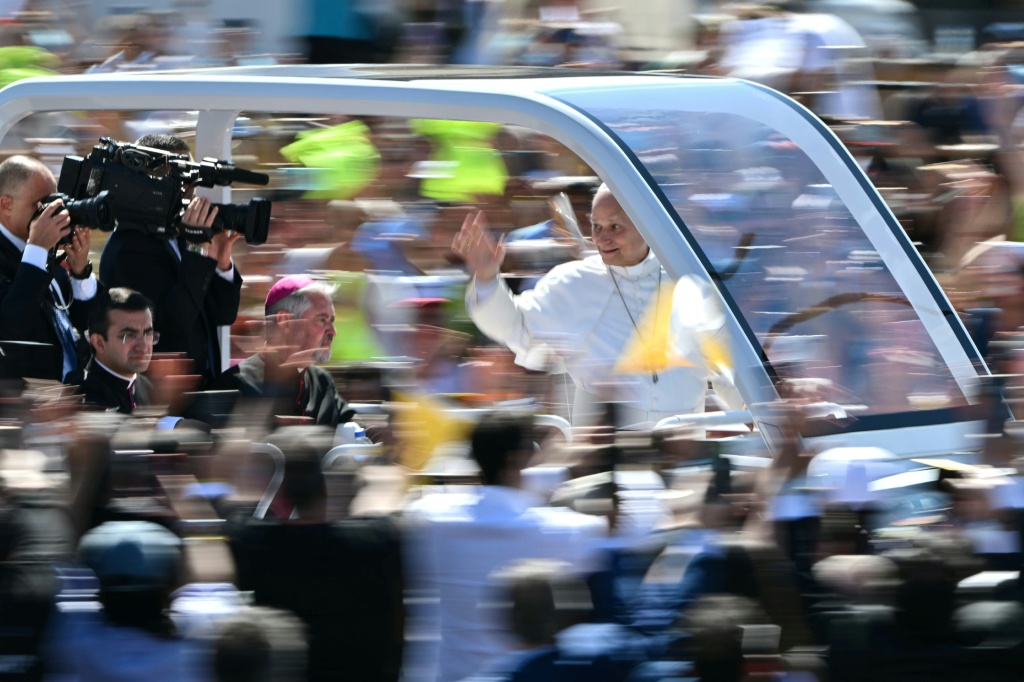
Pope Leo XIV wraps up a 12-day homecoming tour of South America on Monday that eased doubts about his recovery from cancer surgery and highlighted the social justice priorities shaping his early papacy.
The 71-year-old pontiff traveled through Uruguay, Argentina and Peru -- a demanding itinerary many doubted he could complete a month after lung surgery.
From the high Andes to the sweltering Amazon, US-born Leo crisscrossed a continent where he spent nearly two decades as a missionary, and picked up Peruvian citizenship along the way.
Visiting care homes and prisons, the leader of the world's 1.4 billion Catholics delivered hard-hitting speeches and browbeat political leaders like Argentina's Javier Milei, insisting growth must benefit all, and speaking in defense of the poor, the elderly and disabled people.
Pulling it off has proved Leo's "incredible strength and determination," which people had largely "underestimated," said Vatican expert Elise Ann Allen, who has written a biography of Chicago-born Leo.
"We're also seeing the missionary pope in a way that we've never seen him before," she told AFP.
In wealthy, secular Uruguay, the pontiff ventured into the most dangerous neighborhood in the capital Montevideo to highlight the deaths of children caught up in drug violence.
He urged greater solidarity with the lonely and suffering, describing the country's high suicide rates as "painful" and demanding greater respect for women, a theme that would return throughout his trip.
In Argentina, Leo drew more than two million people to masses in both Buenos Aires and nearby Lujan -- the biggest of his papacy to date.
He was welcomed by weeping Argentine pilgrims who had long waited in vain for his predecessor, Francis, to return.
Leo visited the notorious Devoto prison, telling inmates there was hope for even the most evil, and told a home for people with disabilities that a nation's progress should be judged by how it treats its most vulnerable citizens.
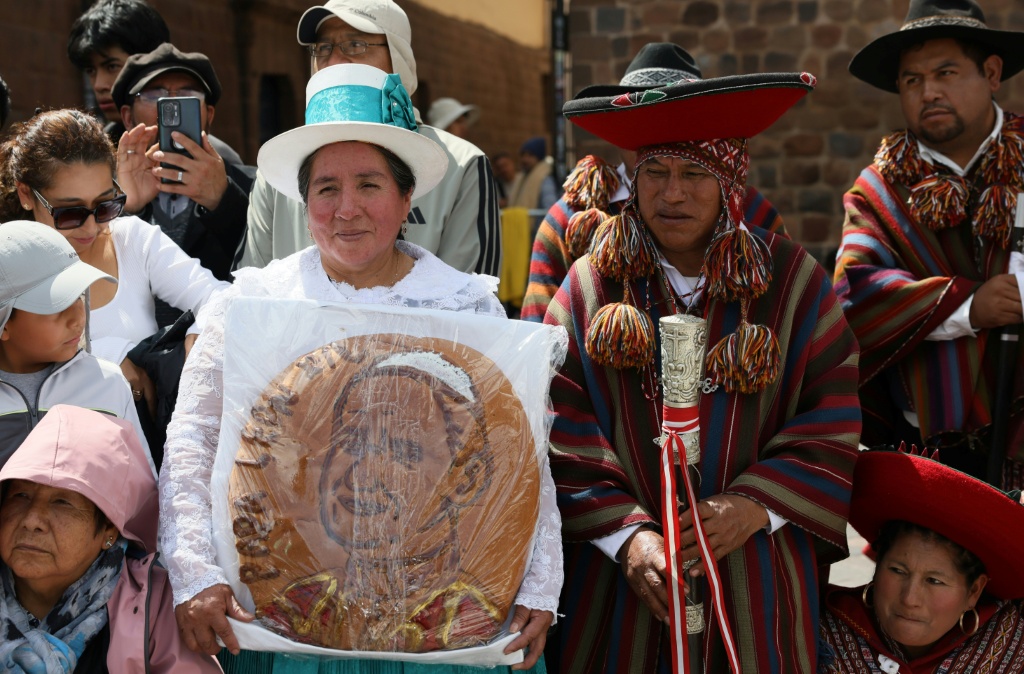
His likeness appeared on alfajores pastries and jars of dulce de leche as Argentines celebrated the landmark visit.
But it was his return to Peru, and the areas he served as Bishop Robert Francis Prevost, that was the emotional highlight of the trip for Leo.
Three million people lined the streets to welcome him in Lima.
He told them they had formed him as a pastor, saying: "Today I understand how much of this land remains with me and how much of my own story also belongs to you."
From the baking desert to the Andes, crowds chanted "The pope is Peruvian," and old friends welcomed him home.
He met six victims of clerical abuse in Argentina and Peru, including some linked to the once-powerful and now-disbanded Catholic society, Sodalitium Christianae Vitae.
In Peru, he spoke of the "pain" caused by Catholic clerical abuse and said the Church must make "amends" to victims and foster "a culture of prevention and protection."
The most physically taxing part of the trip took him from the desert to high-altitude Cusco, the heartland of the Inca Empire, and then down to the hot and humid Amazon basin.
In Pucallpa, he said environmental destruction was threatening both the rainforest and the people who depend on it, and denounced the unacceptable neglect suffered by many Indigenous communities.
"The cry of the earth and the cry of the poor are inseparable," he said. "The blood of these brothers cries out to God and demands justice."
On Monday, he will visit a center for elderly people and hold a final mass in Lima, before returning to the Vatican.
The pope's cancer diagnosis fewer than 18 months into his papacy shook the Catholic Church, and this trip -- one of the most grueling in decades -- has been closely watched as a barometer of how his papacy may be affected.
As if in response to doubters, Leo said neither old age nor ill health could "extinguish" his religious zeal.
Returning to Latin America has allowed him to "get back in touch with the roots of who he is," biographer Allen said. "I think it's going to awaken something in him."
"I think we're seeing a new chapter of Pope Leo's papacy begin," she said.