



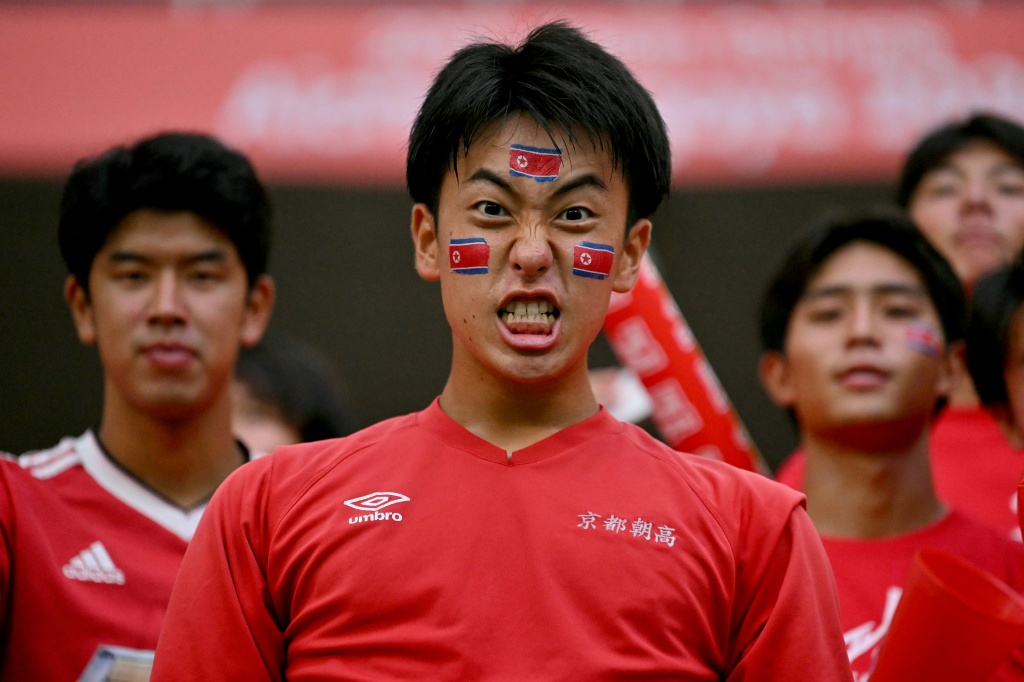

The Asian Games in Japan closed on Sunday after a fortnight lit up by record-smashing young stars but marred by mishaps, mediocre crowds and accusations of mismanagement.
More than 17,000 athletes and officials, a bigger number than the Olympics, descended on Nagoya and Aichi prefecture for the continent's premier sporting spectacular.
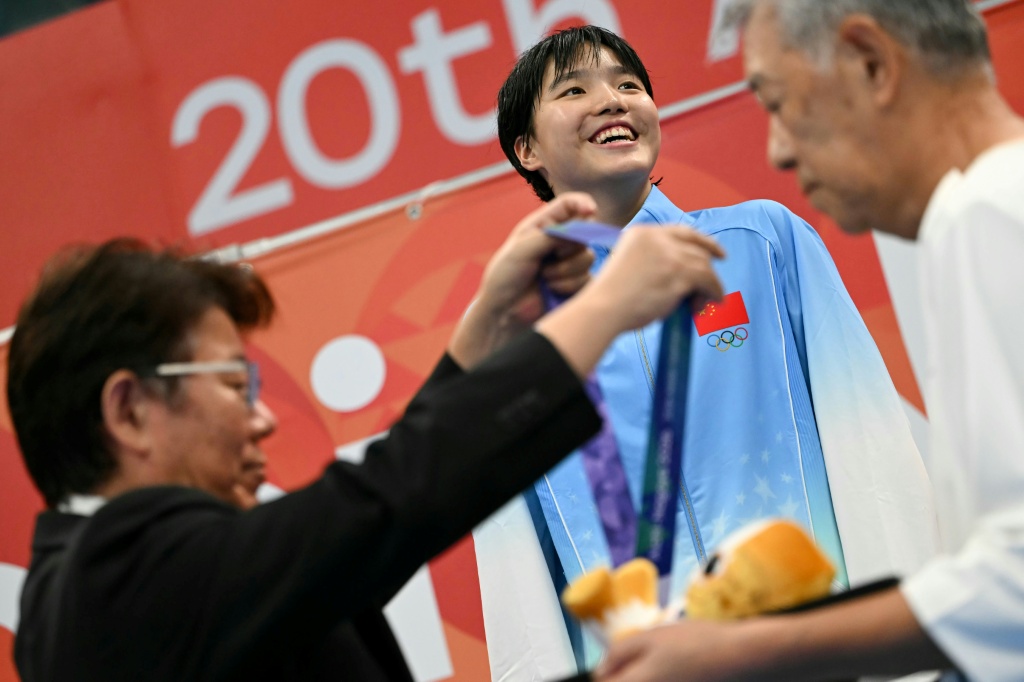
Chinese swimming sensation Yu Zidi, just 13, stole the show with three gold medals, all in Games-record times.
She looks set to be a major medal threat at the Los Angeles 2028 Olympics.
The schoolgirl was named a Games MVP to cap an extraordinary showing that saw her scorch to gold in the 200m butterfly and do the 200m-400m individual medley double.
For all that, the shy teenager said: "I don't think I am what people describe as a prodigy."
Also in the pool, Japanese swimmer Shin Ohashi, only 17, smashed the men's 200m breaststroke world record to delight the home crowd.
In athletics, where rain tumbled down over several days, the 20-year-old Thai sprinter Puripol Boonson did the 100m-200m double and was named men's MVP.
On a dry evening, a celebratory closing ceremony full of colour and song saw Japan hand over hosting duties to Doha 2030.
"Tonight we close a Games that will shape the next generation of Asian sport," said Olympic Council of Asia (OCA) president Sheikh Joaan Bin Hamad Al-Thani.
Top officials were on the defensive up until the last minute.
OCA director general Husain Al-Musallam said "numbers are facts", pointing to 50 world records at the Games after they opened on September 19.
"The athletes cannot perform if they don't sleep good, the athletes cannot perform if they don't have good transportation," he said.
This 20th edition of the Games, which were first contested in 1951, did not have a traditional athletes' village in a bid to save money.
Instead, participants were housed in wooden temporary units, on cruise ship the Costa Serena and in hotels.
Organisers said this was a template for future multi-sports events.
But it came with issues, with some teams complaining the units were too cramped and the beds too short.
The ballooning number of athletes and officials meant there was not enough beds for everyone.
A Thai Olympic official told AFP it was "like musical chairs" trying to get somewhere to sleep.
The sport, including a blockbuster cricket final won by India against arch-rivals Pakistan, did sometimes shine through.
North Korean weightlifter Ri Song Gum, a 140cm (4ft 7in) pocket powerhouse, set three new world marks in one day for gold.
But problems kept coming, including organisers playing North Korea's national anthem for the South Korean hockey team.
There were athletes' buses that did not turn up when they should, or did not arrive at all.
Two teams were sent to the wrong venue, delaying a volleyball match.
"If I were to give them a grade, it would be an F," Ryu Seung-min, president of the Korean Sport and Olympic Committee, said.
Games organisers were on the back foot as well over attendances, with the opening ceremony taking place in front of thousands of empty seats.
At the women's football semi-final between hosts Japan and South Korea there were 998 spectators in a 50,000 stadium.
Japanese Olympic Committee president Seiko Hashimoto admitted that "there were many problems", but said the country wants to host more international events and will learn from the experience.
She said bad weather had turned some spectators off, but was eager to point out that some sports were well attended.
About 30,000 saw South Korea beat Japan 1-0 to clinch men's football gold, although the occasion was tarnished when the South Korean flag failed to go up in the victory ceremony.
The hosts finished with 83 golds, a distant second in the medals table behind China with 169.
Japan's tally included gold for Yuki Kurihara, who won in eSports aged 11, making him the youngest Games champion in history.
Several sports with ambitions of making the Olympics made their debut, including padel, MMA and virtual taekwondo.
Latest stories
Sports Alcaraz through to Japan Open semis, Fils crashes out
Carlos Alcaraz qualified for the semi-finals of the Japan Open on Sunday after an ailing Denis Shapovalov retired to hand the world number three...
Sports Sabalenka out of China Open in third round, Medvedev into semis
Aryna Sabalenka was swatted aside in straight sets in the third round of the China Open on Sunday, leaving the women's draw without its top two seeds, while Daniil...

Europe Russia strikes hit Kyiv as Germany's Merz visits
Russia struck another major bridge in Kyiv on Sunday, soon after Germany's chancellor arrived on a surprise visit to show European support in the face...