



The video game industry has been shaken by job losses and growing threats from artificial intelligence, but the independently produced Canadian game "Paralives" has defied those headwinds.
Paralives is a life-simulation game, a category in which players control the lives of simulated people in a virtual world, including their relationships, looks, homes and careers.
The genre has been dominated for years by "The Sims" franchise, but Montreal developer Alex Masse's Paralives has mounted a scrappy, insurgent challenge.
Addressing the Montreal International Game Summit this week, Masse said he pumped "two years of personal savings" into making Paralives, which began as a "solo project" but now employs 15 people.
Masse has fine-tuned the game with help from users, who have also multiplied.
He began by launching prototypes online.
"On my social media page, I had one like. It was my mom," he told the conference audience.
But he started getting attention on YouTube, quit his part-time job as a game developer at Unity Technologies and devoted himself full-time to Paralives.
He raised funds on the Patreon platform and, after six years of testing, tweaking and retesting, launched Paralives in May.
"We had 200,000 bugs at first when it was released, it was a bit overwhelming," Masse said, adding that he expects to roll out a first major update in a few weeks.
"It's hard to compete with games like 'The Sims'," he told the summit, of the massively popular life-simulation series produced by video game giant Electronic Arts (EA), which also made the FIFA soccer games and Madden NFL.
But the decision by EA's US owners to sell the company to a consortium led by Saudi Arabia's Public Investment Fund has created unease among some gamers.
The $55 billion deal that closed this summer raised ethical concerns among players who have flocked to the indie Paralives as a Sims alternative.
Paralives sold more than a million copies within a month of its May release.
Masse said this early success will not lead to a pivot away from core principles, such as maintaining a small autonomous team.
Montreal, a gaming hub since the 1990s, has not been immune to industry-wide disruption.
Several of the 250 gaming studios based in the city have had layoffs this year.
French gaming heavyweight Ubisoft, which opened a Montreal office in 1997, has closed its offices in the Canadian cities of Halifax and Winnipeg.
The turmoil was a dominant topic of discussion at the Montreal summit, with participants warning that increased use of AI in game creation and development would lead to further job losses.
Masse warned aspiring developers that times are tough and that breaking through will not be easy, suggesting they "spend time analyzing the market" before trying to launch a game.
Latest stories

Sports Leaving USA for Man Utd 'most difficult' decision of career: Pochettino
Mauricio Pochettino bade an emotional farewell to United States soccer on Friday, describing his decision to join Manchester United as "one of the...
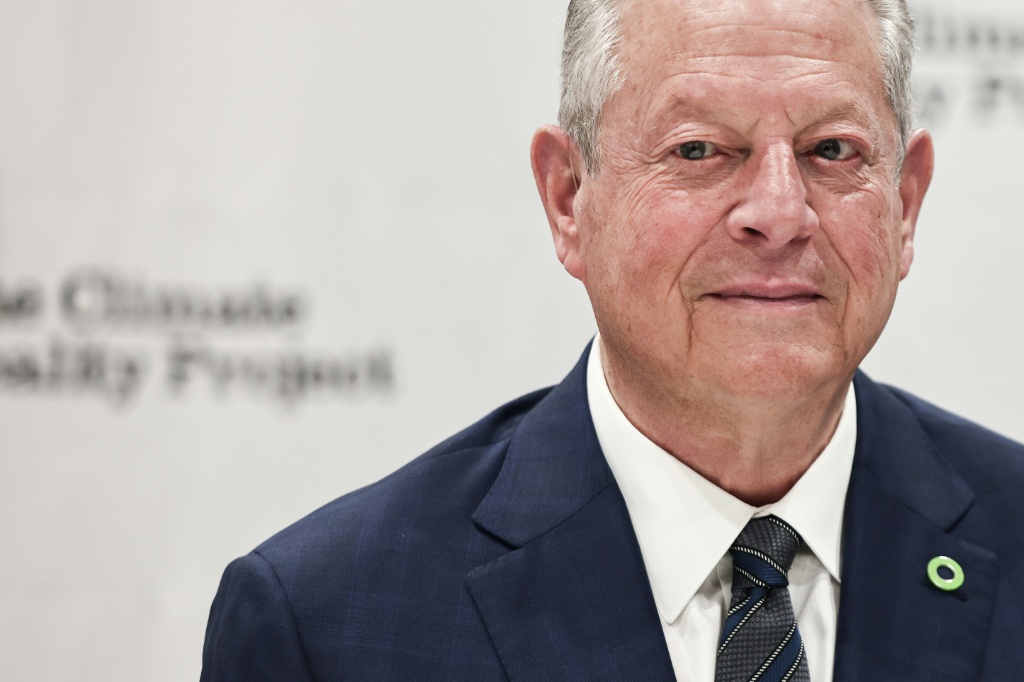
Climate and Environment Gore blasts 'insane' Saudi veto power at climate talks
Former US vice president Al Gore said it was "literally insane" that oil-producing nations such as Saudi Arabia could block global action against climate change, calling...

Business and Economy US Treasury chief blames Commerce Dept for failure in Nvidia scandal
US Treasury Secretary Scott Bessent on Friday blamed the Commerce Department for failing to blacklist Megaspeed, the Singapore company at the center of a scandal that prompted Nvidia...