


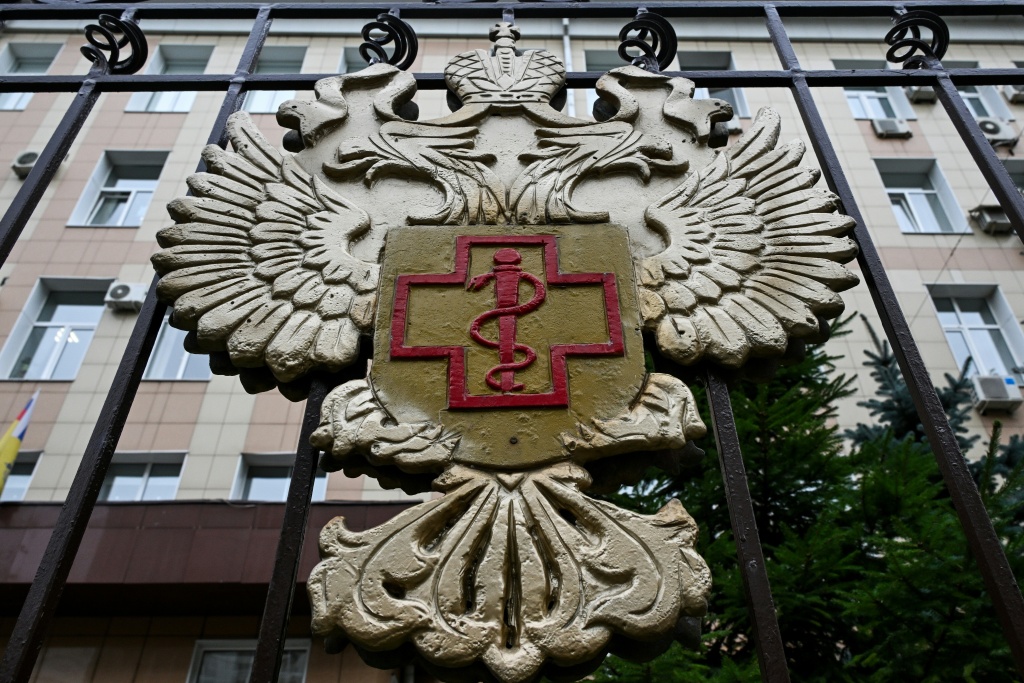
Russian authorities denied Tuesday that they were imposing anti-plague measures after a laboratory technician reportedly died of the disease, and reacted to Washington's offer of assistance by proposing to help battle US infectious diseases.
It was reported last week that a worker at an anti-plague institute in Siberia's Irkutsk region died of pneumonic plague.
But the authorities say the cause of death is not confirmed and health watchdog Rospotrebnadzor has denied claims circulating in a document online that special measures had been put in place.
"We wish to clarify that the document and information in question do not originate from official sources and are untrue," it said on Telegram.
"No such decisions have been made at this time," it said, stressing that the health situation in the region was stable.
Russian news outlet People of Baikal reported on Friday that the dead woman -- named as 28-year-old Darya Shipilova -- may have contracted pneumonic plague from a broken test tube.
Other media reported a possible link between her death and a lab accident at the facility.
The People of Baikal outlet also said up to 200 people with whom she may have had contact were under quarantine.
But Russian officials said postmortem tests had not detected the disease.
Irkutsk Regional Governor Igor Kobzev said Monday that a Rospotrebnadzor watchdog inspection had found that the woman died of pneumonia and the cause was "undetermined".
"No microorganisms linked to the young woman's professional work were found in her biological samples," he said.
And there had been "no new cases of staff from the anti-plague institute seeking medical attention" since the death, he added.
Plague is a bacterial disease that can occur in several forms, including pneumonic plague, which is the most contagious type and can be transmitted by respiratory means. Bubonic plague is transmitted by infected fleas.
Pneumonic plague, which causes lung failure, can be fatal if not treated early, according to the World Health Organization.
"The WHO initial risk assessment from the information available estimates the risk to be moderate to low for Irkutsk," WHO spokesman Christian Lindmeier told a press briefing in Geneva.
He said the risk was low for Russia as a whole, and very low for the rest of Europe.
US President Donald Trump meanwhile said his government was looking at the situation "very strongly".
"We'll help them as much as we can," he told reporters on Monday.
In an apparent response, Rospotrebnadzor on Tuesday announced that Russia was prepared to assist the United States in combating its own outbreaks of infectious diseases.
"The situation regarding dangerous infectious diseases remains unstable," it said, highlighting among other things a "significantly worsened" measles situation in three US states, and a "fatal case of plague" recorded in New Mexico in June.
Russia, it stressed, "possesses extensive practical and scientific experience in ensuring epidemiological well-being, both domestically and internationally", and was "prepared to provide the US side with specialists, laboratory equipment and highly effective diagnostic and preventive tools".
An international conference on plague and other infectious diseases will meanwhile be held in Irkutsk on October 21-22.
The conference was arranged in June and organisers said it was "unrelated to the recent death of an employee of the anti-plague institute".
Latest stories
Society 'Afraid for my future': Tens of thousands demand better education in France
Tens of thousands of demonstrators took to the streets across France on Tuesday, as unions and teachers joined high school students who for days have been demanding better learning conditions...

Sports Alcaraz wins Japan Open for first title since injury return
Carlos Alcaraz said he "didn't want to take anything for granted" after winning his first title since returning from a four-month injury layoff...

European Edition Iceland is 'critical outpost' for security, says Rubio during visit
US Secretary of State Marco Rubio said Tuesday that Iceland had long been a "critical outpost" for security during a visit to the island, as his country pushes for greater...